Business Waste Removal Cricklewood — Health & Safety Policy
Purpose: This policy sets out the health and safety standards and responsibilities for our business waste removal and commercial rubbish collection activities. It applies to all staff, contractors and temporary workers involved in waste collection, transfer, handling and disposal within our service area. The aim is to prevent injury, reduce risk and ensure compliant, sustainable waste management practices for corporate and retail clients.
Scope and Responsibilities
The scope covers routine office refuse removal, bulky item collection, skip servicing and hazardous material handling where authorised. Management retains overall responsibility for policy implementation, while supervisors and drivers are responsible for daily compliance. Employees must follow safe systems of work, report hazards and use appropriate equipment. Contractors engaged in rubbish removal services must demonstrate equivalent health and safety standards before starting work.
Risk Assessment and Safe Working Procedures
All operational activities are subject to documented risk assessments which are reviewed regularly and updated after incidents or process changes. Key risk controls include vehicle safety checks, manual handling protocols, segregation of recyclables and hazardous wastes, and secure containment during transport. Risk assessments identify:
- mechanical hazards from lifting equipment;
- biological risks from contaminated waste;
- traffic and site access risks for collection operations;
- chemical hazards from identified hazardous items.
 Training, Competence and Personal Protective Equipment (PPE)
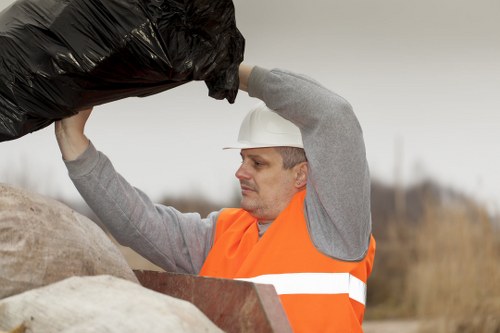
Employees receive induction training and job-specific instruction covering manual handling, spill response, sharps awareness and safe operation of lifting aids and compactors. Refresher training is compulsory at set intervals and after incidents. Approved PPE (gloves, hi-vis clothing, safety boots, eye protection and respirators where needed) must be worn and maintained. Supervisors ensure PPE is available and used correctly to reduce exposure to waste-related hazards.
Vehicle, Site and Equipment Safety
Vehicles used for rubbish removal Cricklewood operations are subject to pre-use checks, documented maintenance and load security procedures. Drivers must log checks and report defects. Loading and unloading zones are assessed for safe access and segregation of pedestrian routes. Mechanical lifting devices and compactors are inspected under an agreed maintenance schedule and only operated by trained personnel. Permit-to-work systems are used for high-risk tasks.

Hazardous Waste Handling and Compliance
Where commercial waste removal includes hazardous materials, disposal follows statutory controls and duty of care obligations. Hazardous items are identified, segregated and transported in approved containers with appropriate labelling and documentation. Waste transfer notes and consignment documentation are maintained to demonstrate legal compliance. Employees are instructed on recognising hazardous categories and the escalation process for unknown or suspect materials.
Emergency Preparedness and Incident Management
Emergency procedures cover spills, fires, sharps injuries and vehicle incidents. Response plans include immediate containment measures, first aid arrangements, reporting lines and notification of relevant authorities where required by law. Incident investigation aims to identify root causes, implement corrective actions and prevent recurrence. All incidents are recorded and reviewed by management.
Monitoring, Review and Continuous Improvement
Performance is monitored through regular site inspections, audits and key performance indicators for safety compliance and incident trends. Continuous improvement is driven by employee feedback, audit outcomes and changes in legislation. Policies are reviewed at least annually or sooner if operational changes or significant incidents occur. Records of training, assessments and audits are retained in accordance with record-keeping requirements.
Employee Duties and Safe Culture
Every team member is expected to contribute to a safe workplace by following policies, reporting hazards and participating in safety initiatives. Managers support a positive safety culture by providing resources, recognising good practice and enforcing standards consistently. Bulky item removal, skip services and routine waste collection must be performed in a manner that minimises risk to staff, clients and the public.
Summary of Key Controls
- Documented risk assessments and safe systems of work for all waste activities;
- Compulsory training, competence checks and maintained PPE;
- Vehicle and equipment inspection regimes and secure load procedures;
- Segregation and compliant handling of hazardous wastes with full documentation;
- Clear emergency response, incident reporting and continuous review processes.
Implementation of this Health & Safety Policy ensures that our business waste management and rubbish removal services are conducted responsibly, legally and with the wellbeing of staff and the public as a priority. Management endorsement and active participation at all levels maintain a robust safety framework for commercial waste removal and related services.
